

How To Refresh High-End Eyewear Without Replacing The Frames
If you are a modern guy who loves fashion, it is essential to keep up appearances with quality designer frames that complement those stylish outfits. However, over time, the lenses will succumb to everyday wear and tear, or you may need a new prescription. Even premium frames can feel outdated if the lenses no longer deliver clear, sharp vision. In my latest article, I will share top tips for upgrading your favourite specs without investing in a completely new pair. Click to find out more.
If you’re considering upgrading your beloved designer frames (perhaps you need a Ray Ban lens replacement or your vision has changed and you need a new lens prescription for your Armani or Hugo Boss styles), buying new glasses isn’t your only option.
Professional lens replacement lets you refresh your eyewear with modern lens technology while keeping the frames you love. You can enjoy clear vision, upgraded coatings, and improved performance – often saving 50-70% compared to purchasing an entirely new pair.
Why Refreshing Eyewear Beats Replacing Frames
The Value Of Quality Frames
Designer frames from top brands like Oakley, Gucci, or Valentino will typically last 5-10+ years if cared for, but the lenses will wear out over time. Replacing the lenses allows you to refresh your vision while keeping the frames fit and quality intact.
The Financial Advantage
You can significantly cut costs by replacing the lenses rather than splashing out on a brand-new pair of glasses.
- Average complete prescription glasses: $300-$500
- Designer frames at boutique opticians: $400-$800+
- Premium progressive lenses alone: $250-$450
Compare these rates with lens replacement services –
- Single vision lens replacement: $55-$120
- Progressive lens replacement: $150-$280
- Premium coatings: Often included or under $50
If you choose to go with a lens refresh (instead of a total replacement), you can save $200-500 per pair. If you wear both prescription glasses and prescription sunglasses, that could add up to $400-1000 in annual savings.
Modern Lens Technology That Transforms Performance
Blue Light And Digital Protection
The dangers of blue light have been well documented, and the introduction of protective filters has been a game-changer – reducing eye fatigue, headaches, and sleep disruption (all without negatively affecting clarity or colour accuracy). It is beneficial to educate yourself on these types of lenses and determine whether they will help you on a daily basis.
Understanding Your Lens Options
Single Vision Lenses
- Single vision lenses help to correct either near or farsighted eyesight with one prescription across the lens. They are highly affordable ($55-120), quick to replace, and work with most frames. This choice is ideal for young adults or for distance-only correction.
- Progressive lenses (varifocals) deliver a seamless transition for distance, intermediate, and reading zones, which is perfect for presbyopia (the loss of ability to focus on close objects – which typically occurs as we get older). The cost of replacements is $150-280+, and they also require a 1-2 week adaptation period.
High-Index Materials
Next up, we have high-index lenses, transforming typically bulky, strong prescriptions into something thinner and lighter.
- 1.56 Mid-Index: 15–20% thinner
- 1.61 High-Index: 30–35% thinner
- 1.67 High-Index: 40–45% thinner
- 1.74 Ultra-High-Index: 50%+ thinner
Polycarbonate lenses boast a 10X stronger build compared to standard plastic. Therefore, they are ideal for sports, children, and those with active lifestyles.
The Eyewear Refresh Process
Getting Your Prescription
Before you start the lens replacement process, ensure you have a current prescription (usually valid for 1-2 years). If an update is needed, book an eye exam at a trusted clinic.
Your prescription should include the following –
- Sphere – main corrective power
- Cylinder & Axis – astigmatism correction
- Add – reading power for multifocals
- Pupillary Distance (PD) – for proper lens alignment
Ordering Process
To enjoy a simple process when replacing lenses in your existing lenses, follow this straightforward sequence –
1. Choose Lenses – Single vision, progressive, or speciality. Choose to add coatings, tints, or polarisation.
2. Enter Prescription – Provide prescription values; most services will verify the overall accuracy.
3. Provide Frame Details – Brand, model, and dimensions.
4. Ship Frames – Secure packaging with tracking and insurance.
5. Professional Processing – Lenses removed, new lenses are cut, coated, fitted, and finally, quality-checked.
6. Receive Glasses – Refreshed eyewear shipped back to you, ready to use.
Frame Compatibility
More often than not, the majority of frames work perfectly for lens replacements. Full-rim and semi-rimless frames in good condition (or valuable designer frames) are top candidates for the procedure.
Special considerations:
- Rimless frames: these models require precise hole placement, but experienced technicians can achieve the transition.
- Wrapped sports frames: this style demands specialised lens cutting for extreme curves.
- Worn or damaged frames: if your frames are cracked or hinges are broken, then lens replacement is not financially worth it (as it won’t fix broken frames).
- Vintage frames: if you want to spruce up a pair of classic frames, you need to get a thorough assessment beforehand, to ensure delicate reconstruction is required.
Designer Frames And Speciality Eyewear
Protecting Luxury Frame Investments
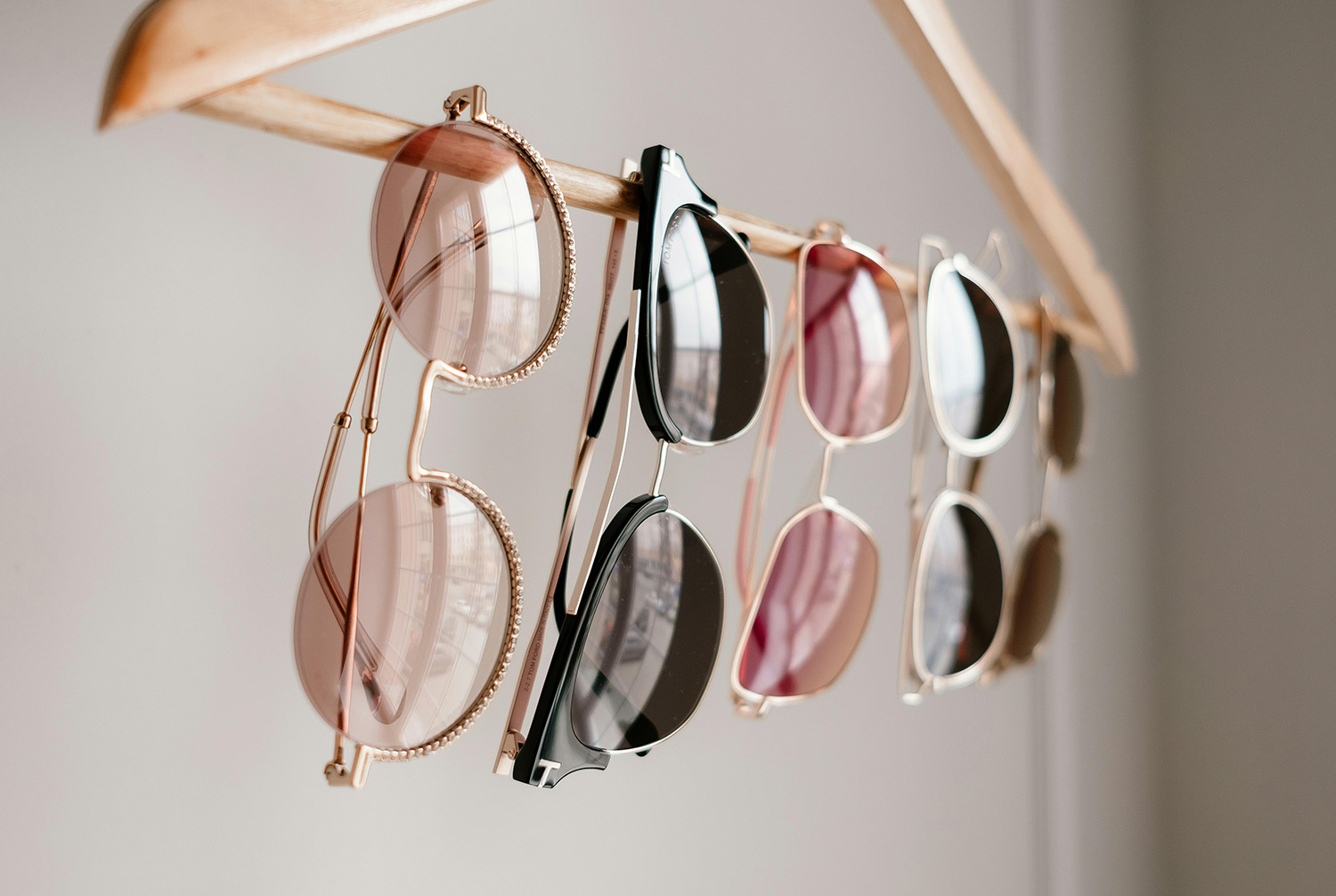
Designer frames from brands such as Prada, D&G and Ralph Lauren are a significant investment (easily sitting around $200-600+), and lens replacement services help to preserve that value – your frames remain authentic, and you can avoid discarding perfectly good eyewear.
Prescription Sunglasses
If you wear prescription sunglasses, they can also benefit from a range of replacement lens options – tints, polarisation, mirror coatings, or gradient. For example, you can upgrade performance for $100-200 instead of $300-500 for new prescription designer sunglasses, often with superior lens technology.
When Lens Replacement Makes Perfect Sense
Here are a number of top candidates for eyewear renewal –
- Prescription changes: if the frames offer a perfect fit, but your vision has changed.
- Lens damage: can incorporate various issues, including scratches, coating wear, or impact damage, which affect overall clarity.
- Technology upgrades: implementing new features such as blue light protection, photochromic, or polarisation.
- Multiple pairs: many stylish guys will want different options for their daily wardrobe choices (or duplicate pairs in case of accidents).
When To Consider Complete Replacement
Despite the money-saving benefits of replacement lenses, in certain specific cases, a full replacement makes much more sense.
- Frames are damaged, broken, or structurally compromised.
- The current frames no longer align with your professional image.
- Despite adjustments, the fit is not perfect.
- You are ready for a complete aesthetic overhaul.
One of the major benefits of lens replacement is having options – you can effectively avoid costly body and lenses replacements, when a strategic lens refresh will solve the problem.
Maximising Your Lens Replacement Experience
Selecting The Right Service Provider
As with all aspects of life, not all lens replacement services are created equal. Choose providers who stock designer brands, offer detailed customer reviews, and provide easy-to-understand warranties for craft and materials.
Preparing Your Frames
- Always take clear photos (and from multiple angles) before shipping.
- Clean the glasses carefully with warm water and a microfibre cloth.
- Remove any loose screws or decorative parts.
- Remember to include your order number, contact details, and special instructions.
- Include details if the frames have been professionally adjusted.
Post-Replacement Care
- Lenses must sit securely with no gaps.
- The prescription should feel comfortable and correct (minor adjustment time is normal)
- Check the coating clarity and the fit of the frame
- If anything feels wrong, always contact the provider within the guarantee period
Common Questions About Lens Replacement
Will lens replacement damage frames?
Most professional services use specialised tools to avoid damage; however, weak or cracked frames carry a much higher risk.
How long do replacement lenses last?
As a general rule, 2-3 years, although this can depend on the quality of the coating, maintenance and care. Many people will update their prescriptions every 1-2 years.
Can lenses be replaced multiple times?
Absolutely, quality frames can easily handle 3-5+ replacements over time if properly maintained.
Environmental Benefits
There are several environmental benefits to replacing lenses rather than buying new models – less waste, lower manufacturing demand, and reduced packaging. In short, it’s a sustainable choice.
Conclusion: Extending the Life of Quality Eyewear
In summary, lens replacement upgrades your vision with modern lens technology while preserving the frames you love, saving you money, extending their life, and maintaining the comfort and style you have become accustomed to.
It is a practical, cost-effective choice which maximises your investment, ensures clear, comfortable vision, and supports sustainability. If you wear designer glasses and know how difficult it is to find the perfect pair that meets all your key requirements, lens replacement is an excellent option to consider for maintaining your favourite designer eyewear.
Thanks for reading my latest lifestyle article. Please share what you think in the comments section below.
